
If a tooth has cracked, worn thin, or needs protection after a large filling or root canal, a crown is often the most sensible way to restore strength and appearance. But “How are dental crowns made?” What actually happens between the first exam and the moment your new crown clicks into place? At Dental Land in Summerhill, we keep the process calm and transparent—no jargon, just the steps that matter, explained clearly. And if you’ve been pricing options or comparing experiences with a dentist The Annex, the essentials are the same: a well-planned crown should look like your own tooth, feel comfortable on day one, and last for years with everyday care.
How Are Dental Crowns Made? Step 1 — Assessment & Smile Planning
A good result starts with a measured diagnosis. We listen to your symptoms (temperature sensitivity, bite tenderness, cosmetic goals), examine the tooth, and take focused images. This is where “How are dental crowns made?” begins in reality: we confirm that a crown—rather than an onlay or filling—is the most conservative fix that will hold up over time. You’ll see what we see: remaining enamel thickness, crack lines, and how the tooth meets its neighbours. From there, we set a plan that balances durability, appearance, and cost.
Materials Matter: Matching Strength to the Job
Before we prepare the tooth, we choose a material that fits your bite and aesthetics. For back teeth under higher force, modern zirconia offers serious toughness with improved translucency compared to older versions. For front teeth and visible premolars, lithium disilicate (often known by “e.max”) provides a lifelike glow and excellent strength. Porcelain-fused-to-metal still has niche uses when rigidity or special margin designs are needed. Understanding “How are dental crowns made?” means matching what’s in the lab to what’s happening in your mouth—not someone else’s.
How Are Dental Crowns Made? Step 2 — Numbing, Comfort & Conservative Prep
Comfort comes first. We numb the area and test before starting. Then we remove failing material and gently shape the tooth so the future crown has space to fit without looking bulky. This is the part of “How are dental crowns made?” that patients are often surprised by—it’s controlled, careful, and focused on preserving as much healthy tooth as possible. If the tooth needs a core build-up for extra support, we complete it now.
Also Read: Understandingthe Difference Between Dental Crowns and Veneers: Which is Right for You?
How Are Dental Crowns Made? Step 3 — Digital Scan & Colour Mapping
Messy impression trays are becoming rare. A handheld scanner maps the prepared tooth and surrounding bite in seconds, capturing details a camera can’t see. Shade selection follows. For visible teeth, we document colour, translucency, and fine character (little white lines, edge translucency) so the lab can recreate your natural enamel. This digital accuracy is a quiet hero in “How are dental crowns made?”—it’s what helps margins seal precisely and contacts feel right the first time.
Temporary Crown: Keeping You Comfortable Between Visits
You won’t leave with a vulnerable tooth. We make a smooth, well-fitting temporary so you can chew comfortably while the lab fabricates your custom crown. Expect to avoid very sticky foods on that side and to call us if the temporary loosens. Even this short stage is part of “How are dental crowns made?”—a well-shaped temporary protects the tooth, keeps the gums calm, and helps the final crown slide into place with minimal adjustment.
How Are Dental Crowns Made? Step 4 — Laboratory Craftsmanship
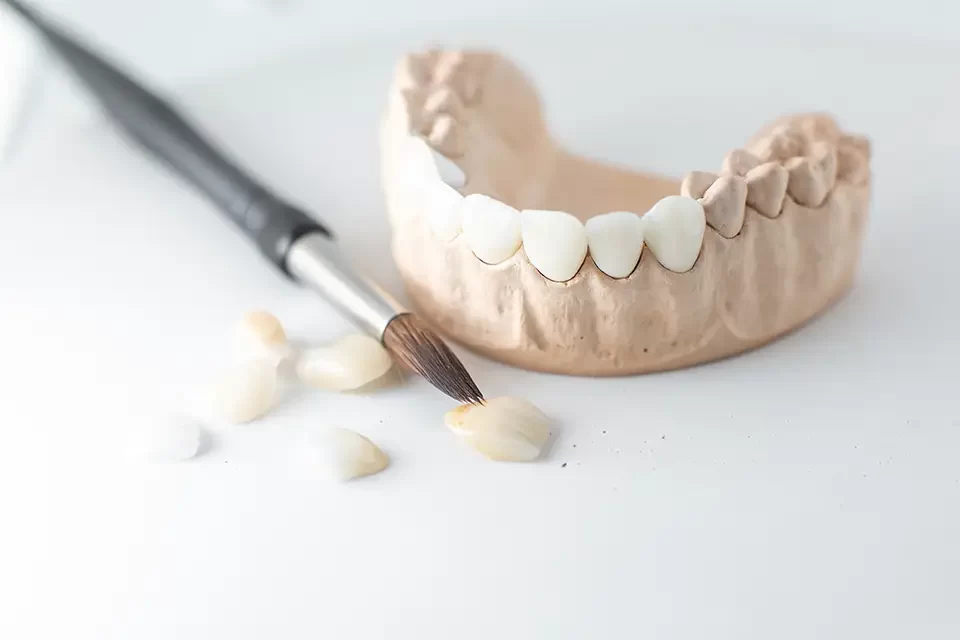
Behind the scenes, technicians use your scan to mill zirconia or press lithium disilicate, then stain, glaze, and polish it to match your natural shade. They refine contacts so the crown nestles between neighbouring teeth and sculpt occlusal grooves so it fits your chewing pattern. In other words, “How are dental crowns made?” is both science and craft: precise milling for fit, artistic finishing for realism.
How Are Dental Crowns Made? Step 5 — Try-In, Adjustments & Bite Checks
At your fit appointment, we seat the crown and check three things: margins (the seal where the crown meets the tooth), contacts (how it hugs its neighbours), and occlusion (how it bites). Tiny blue and red papers show pressure points; we make micro-adjustments so your bite feels even and natural. This is a critical moment in “How are dental crowns made?”—a few minutes of careful refinement here prevents weeks of “this tooth feels tall” later.
How Are Dental Crowns Made? Step 6 — Bonding, Polishing & After-Care
Once everything looks and feels right, we bond or cement the crown permanently, remove any excess, and polish the margins. You’ll get simple after-care: brush twice a day with fluoride toothpaste, clean between teeth daily (floss or interdental brushes), and avoid using teeth as tools. The final step of “How are dental crowns made?” is really about living with your crown comfortably—routine hygiene and a quick check at your regular exams keep it feeling like part of you.
Longevity: How Long Crowns Last (and What Extends Their Life)
Well-made crowns routinely serve 10–15 years; with careful habits, many last longer. The big levers are simple: consistent home care, a nightguard if you clench, and avoiding hard-object biting (ice, pens, tape). If you ever wonder, “How are dental crowns made?” to last, the truth is that good design plus small daily habits is what makes “long-lasting” real.

Sensitivity & Real-World Comfort
Mild temperature sensitivity can appear right after preparation and usually settles once the permanent crown is in place. If sensitivity lingers, let us know—sometimes a small bite tweak or desensitizing treatment helps. Even here, “How are dental crowns made?” plays a role: conservative prep, accurate scans, and precise bonding reduce the odds of ongoing tenderness.
Also Read: 6 Benefits of Getting Dental Crowns
Costs, Benefits & Coverage—Clarity Before You Start
Fees reflect material, lab work, foundation needs (core build-up or post), and case complexity. Many plans cover a portion when the crown is functionally indicated. You’ll receive a written estimate with line items and a timeline, and we can pre-determine benefits on request. Understanding numbers upfront is part of our answer to “How are dental crowns made?”—clear planning, no guesswork.
Ready for a crown that feels like your own tooth again? If you’re still wondering “How are dental crowns made?” or whether a crown is the right call for your situation, book a visit with Dental Land in Summerhill. We’ll examine gently, show you what we see, and outline a plan that fits your mouth, your schedule, and your budget—so your new crown looks right, feels right, and lasts.
FAQs — How Are Dental Crowns Made?
Will my crown look like my other teeth?
That’s the goal. We map shade and translucency carefully so when people ask, “How are dental crowns made?”, the short answer is “to blend in.” For front teeth, we can add subtle character to match your natural enamel.
Is the process painful?
You’re fully numbed during preparation and comfortable at the fit appointment. Most patients describe pressure and vibration rather than pain throughout “How are dental crowns made?”.
Do I always need a crown after a root canal?
Back teeth usually do—crowns protect brittle tooth structure. For some front teeth, a more conservative onlay or bonding may suffice. We’ll explain the “why” before you decide.
Can I get a same-day crown?
In select cases, yes. Same-day milling works well for certain posterior teeth. For nuanced front-tooth aesthetics, a lab-crafted crown often wins on realism.